There are plenty of things we could talk about when it comes to farming, but some topics have a much bigger impact than others. Topping that list is soil. We could spend hours talking about soil health, compaction, crop selection, or soil structure, but there aren't many places to find a simple, usable summary that doesn't require a degree or a week of reading.
My goal is to share what I know about soil and why it matters for your operation. These are the topics I get asked about most, and honestly, our scientific understanding of them has changed a lot in my career.
But for us to get on the same page, I need you to set aside a few common assumptions:
- Balancing the pH in soil is the best way to control available nutrients
- The “status quo” of your yield is as good as it gets
- Grid sampling is the best sampling method
- Soil can be improved in a day and results can we seen in an afternoon
- If a little is good, a lot more must be better.
Let’s start with the basics: Soil sampling.
I always ask guys, "If you don’t know where you are, how do you know where to go?" It sounds simple, but it’s the truth. If we don’t know exactly what state your soil is in right now, we’re just guessing at how to improve it.
For years, the standard has been to rely on institutional soil readings as your baseline. To be honest, that practice is pretty dated, and it’s not doing you any favors. Technology has moved forward, and our understanding of soil science has caught up. We no longer have to rely on generic data from a farm that happens to be "similar" to yours; we can get your farm’s actual information.
You might be thinking, "Those general baselines aren't that far off." Let’s look at a quick example: Calcium.
We really need to look at Calcium in two different ways: the Calcium the plant needs, and the Calcium the soil needs. They affect your crop and your soil differently, and they don't always overlap. If you use a general baseline to decide how much lime to add, you might see a quick boost in plant health or pH for a season. But eventually, those results level off or head downhill. That happens because you were managing for "average" land instead of your specific ground.
overlap. If you use a general baseline to decide how much lime to add, you might see a quick boost in plant health or pH for a season. But eventually, those results level off or head downhill. That happens because you were managing for "average" land instead of your specific ground.
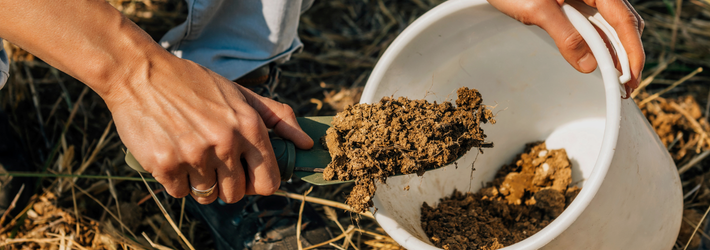
So, where do you start? I recommend moving to composite soil samples. It’s the best way to get real data across your entire acreage. And the good news is, you don’t need to do it constantly, only once over a long window, or if you have a major event like flooding or significant dirt work.